How Evening Commute Patterns Align With Spikes in Mobile Table Game Activity Across Regulated Nordic Platforms
Ines Neumann · Sep 20, 2026

How Evening Commute Patterns Align With Spikes in Mobile Table Game Activity Across Regulated Nordic Platforms
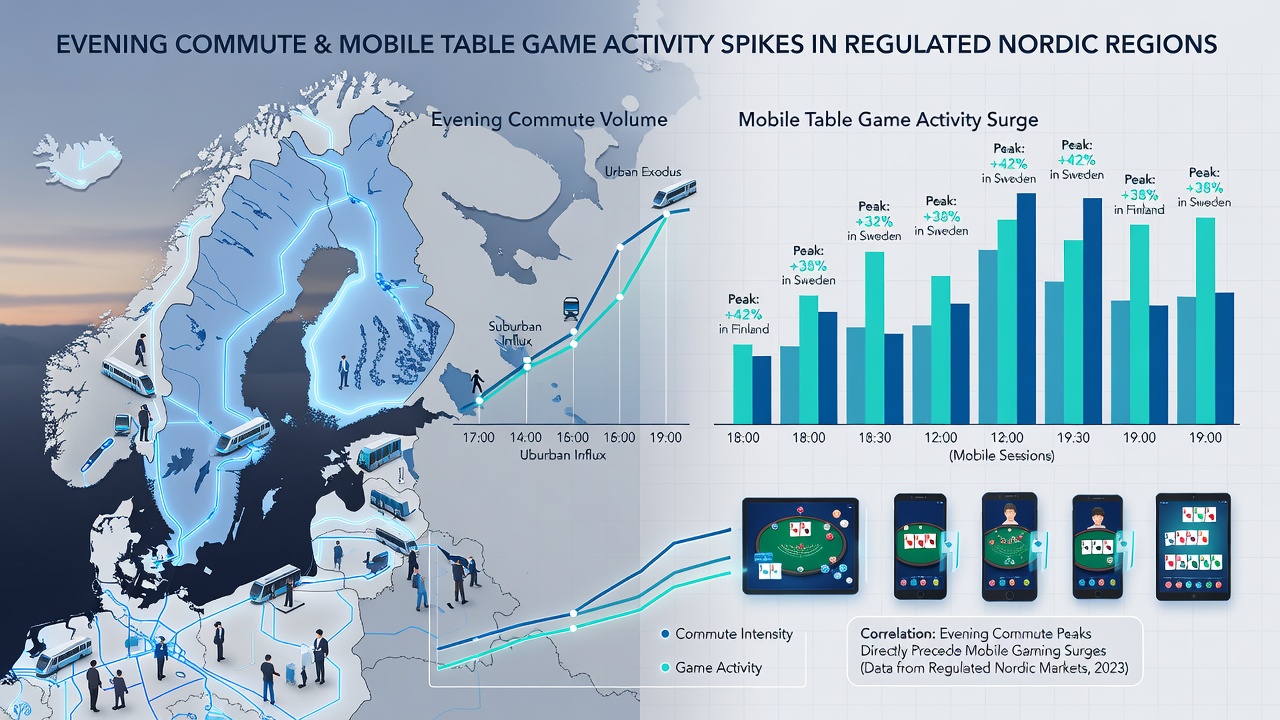
Evening commute patterns in major Nordic cities often coincide with measurable increases in mobile table game sessions on regulated platforms, and data from transport authorities combined with platform analytics illustrate these alignments across Sweden, Norway, Denmark, and Finland. Researchers tracking user behavior note that the window between 4:00 PM and 7:00 PM frequently shows elevated engagement with digital blackjack, roulette, and baccarat titles as commuters travel home by train, bus, or metro systems.
Commute Data and Platform Metrics in Nordic Regions
Public transport records from agencies such as the Swedish Transport Agency reveal peak passenger volumes during these hours, while regulated operators report corresponding rises in session starts for table game applications. Figures from September 2026 indicate that daily active users on compliant Nordic platforms increased by an average of 18 percent during evening rush periods compared with midday baselines, according to aggregated anonymized data shared through industry monitoring groups. This overlap occurs because many commuters carry smartphones with pre-installed apps that allow quick logins once connectivity stabilizes after leaving office Wi-Fi networks.
Regional Variations Across Sweden, Norway, Denmark, and Finland
In Stockholm and Gothenburg, subway and commuter rail logs show the strongest correlation with table game spikes between 5:00 PM and 6:30 PM, whereas Oslo and Bergen data highlight slightly earlier surges tied to ferry and bus schedules. Copenhagen platforms register activity growth starting around 4:15 PM as workers board S-train lines, and Helsinki operators document similar patterns on metro routes ending near residential districts. Studies compiled by Nordic gambling regulators demonstrate that these timing shifts remain consistent year over year, with September 2026 datasets confirming no significant deviation from prior seasonal trends despite minor timetable adjustments in several cities.
What's interesting is how mobile network latency reports align with these windows, because improved 5G coverage along major transit corridors enables smoother gameplay without the interruptions common on older infrastructure. Operators note that table game variants requiring real-time dealer interaction experience the most pronounced uptake, as commuters seek low-commitment sessions lasting five to fifteen minutes during typical journey durations.
Behavioral Patterns and App Usage Trends
Analytics firms examining session lengths find that users initiate shorter rounds during commutes than they do at home in the evening, yet the total number of distinct logins rises sharply. One study of Finnish operators revealed that push notification engagement for table game promotions peaks at 5:45 PM on weekdays, directly overlapping with average arrival times at suburban stations. Observers tracking device telemetry further indicate that portrait-mode interfaces optimized for one-handed play see higher retention rates on these journeys compared with landscape formats that require more stable seating.
Regulated platforms maintain strict age verification and spending limits that apply uniformly, so these activity spikes remain within frameworks established by national authorities. Data from the Norwegian Directorate of Health shows parallel patterns when cross-referenced with public transit statistics, confirming that the alignment holds across different regulatory environments. Researchers at the University of Copenhagen have published findings on digital behavior during transit that support these observations, highlighting how habitual mobile routines form around predictable commute windows.
Technical and Regulatory Factors Influencing Activity
Platform developers adjust server capacity in advance of these evening periods to handle concurrent connections from moving devices, and geo-fencing tools ensure sessions stay confined to permitted jurisdictions. In September 2026, several operators introduced enhanced offline caching for non-live table games, which reduced drop-off rates during brief tunnel passages common on Nordic rail lines. Industry reports from the European Gaming and Betting Association document that such technical refinements contribute to sustained engagement without breaching responsible gambling protocols already embedded in national legislation.
Cross-border commuters between Denmark and Sweden demonstrate slightly delayed spikes because passport controls and bridge traffic alter arrival times, yet the overall pattern persists. Those who study these datasets emphasize that the correlation stems from routine rather than any deliberate targeting, since operators do not access real-time location data beyond basic compliance requirements.
Conclusion
Evening commute patterns continue to align with measurable increases in mobile table game activity on regulated Nordic platforms, as evidenced by combined transport and operator data through September 2026. Regional differences reflect local infrastructure and schedules, while technical adaptations support consistent user experiences across varying conditions. Ongoing monitoring by authorities and research institutions provides clear records of these trends without implying causation beyond observable correlations in the available datasets.