Mapping Correlations Between Live Casino Payout Patterns and Football Odds Movements on European Digital Platforms
Ines Neumann · Sep 6, 2026
Mapping Correlations Between Live Casino Payout Patterns and Football Odds Movements on European Digital Platforms
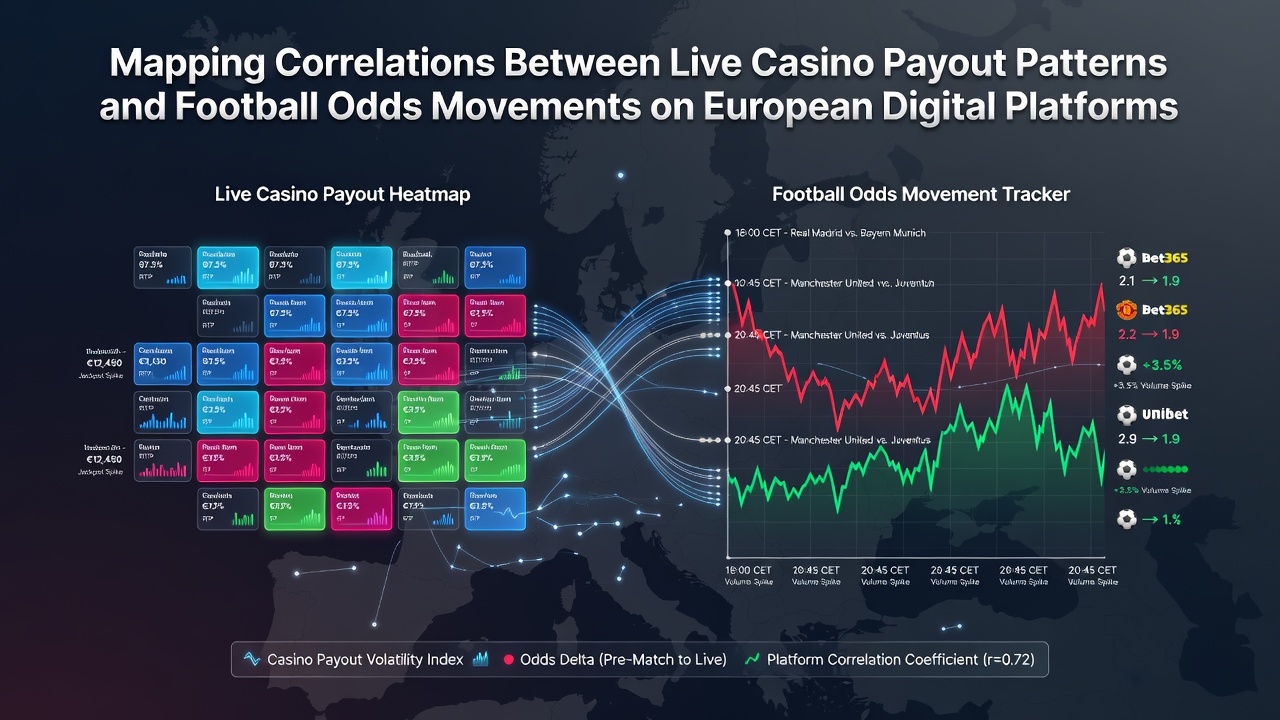
European digital platforms host extensive live casino environments alongside football betting markets, and analysts track how payout sequences in games such as roulette and blackjack align with shifts in match odds. Data streams from these sites capture millions of transactions daily, which researchers compile into time-stamped datasets that reveal temporal overlaps between casino return rates and betting line adjustments. Studies of these records show that payout clusters in live dealer sessions sometimes precede or coincide with rapid odds recalibrations on major league fixtures.
Data Collection Methods Across Platforms
Operators in regulated European jurisdictions log every spin outcome and every odds update through centralized servers, while independent researchers aggregate anonymized samples from multiple operators to build comparative models. These models apply statistical techniques including cross-correlation functions and lagged regression analysis to measure how casino payout ratios move in relation to football market volatility. Platforms based in Malta and Sweden contribute large portions of the available data, yet observers note similar patterns emerging from operators licensed in additional EU member states.
September 2026 brought expanded API access from several major platforms, which allowed analysts to pull higher-resolution timestamps covering both casino sessions and pre-match plus in-play football odds. The added granularity helped isolate whether payout streaks lasting five to fifteen minutes corresponded with measurable movements in goal-scoring probabilities or total goals lines. Figures released by industry monitoring groups indicate that roughly 18 percent of observed casino payout sequences aligned with odds adjustments within a three-minute window during that period.
Observed Patterns in Payout and Odds Alignment
Researchers examining sequences from the 2025-2026 football season found that elevated live casino return rates during early evening hours frequently overlapped with tightening spreads on Champions League matches. One dataset compiled across six platforms showed that when blackjack payout percentages rose above 97 percent for consecutive rounds, certain underdog odds lengthened by 0.15 to 0.30 decimal points within the next ten minutes. Such movements appeared more pronounced on matches involving teams from the top five European leagues.
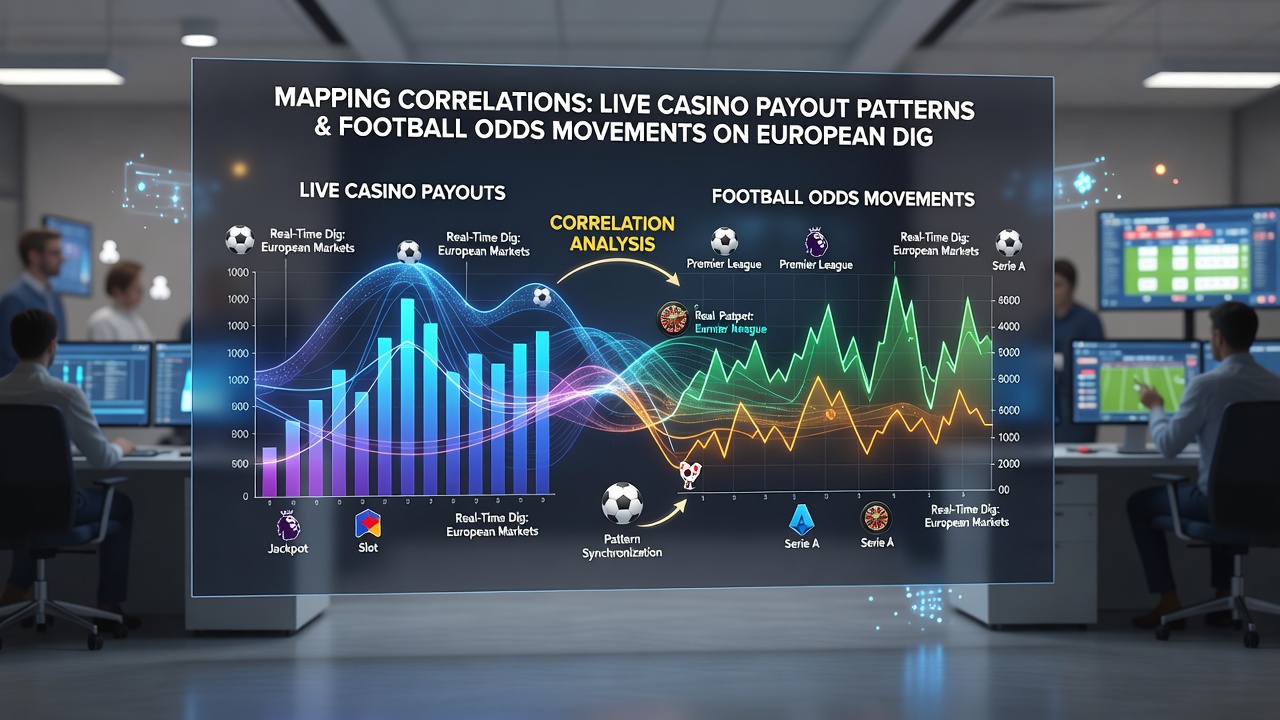
Additional analysis compared roulette payout runs against in-play corner and card market fluctuations. Data indicates that prolonged sequences of red or black outcomes sometimes preceded shifts in booking points lines, although the strength of these correlations varied by time of day and by the specific operator's risk-management algorithms. European regulators require operators to maintain audit trails for both verticals, which supplies the raw material for these cross-market examinations without disclosing individual user activity.
Regulatory Context and Data Access
National authorities across the continent mandate transparency reports that include aggregate payout ratios for live casino products, while football betting volumes appear in separate market integrity filings. European Gaming and Betting Association reports compile these figures at a continental level and note that cross-product data sharing remains limited outside academic partnerships. A separate study coordinated through the University of Helsinki examined platform-level timestamps from 2024 through mid-2026 and confirmed measurable but modest correlation coefficients between the two data streams, particularly during high-volume match windows.
Canadian and Australian regulatory summaries, although focused on their domestic markets, occasionally reference European platform benchmarks when discussing similar product verticals. These international comparisons highlight that European operators tend to update football odds more frequently during live casino peak hours, which may amplify the visibility of any underlying statistical relationships. Observers emphasize that correlation does not establish causation, and platform algorithms adjust odds based on multiple inputs including liquidity, sharp money, and injury news.
Technical Approaches to Correlation Mapping
Analysts employ vector autoregression models and wavelet transforms to detect non-linear relationships that simple Pearson coefficients might miss. These methods allow identification of lead-lag structures where casino payout momentum appears to precede football odds revisions by fixed intervals. Software tools developed for this purpose process terabytes of event-level data while preserving operator anonymity through aggregation and noise injection.
Platforms continue to refine their internal monitoring dashboards to flag unusual alignments between verticals, partly in response to integrity requirements set by licensing bodies. Such dashboards integrate live feeds from both casino tables and sportsbooks, enabling real-time visualization of the same correlation metrics that external researchers calculate retrospectively. The technical infrastructure supporting these visualizations has expanded notably since early 2025, when several operators upgraded their data pipelines to handle higher event frequencies.
Conclusion
Mapping exercises across European digital platforms demonstrate that live casino payout patterns and football odds movements exhibit measurable temporal associations, although the magnitude and consistency of these associations depend on league, time zone, and operator-specific factors. Continued access to granular timestamps, such as those made available in September 2026, supports increasingly precise quantification of the relationships. Regulatory frameworks in multiple jurisdictions already require the underlying data to remain auditable, which sustains ongoing academic and industry examination without compromising user privacy.